
Live Conditions
About Menton
A Town That Unfolds Slowly
Menton rewards visitors who prefer a place to reveal itself gradually rather than announce itself all at once. Set at the gateway to Italy, between Monaco, the Mediterranean and the first foothills of the Alps, the town has a distinctive Franco-Italian character. Its border position has shaped its architecture, food, colours and everyday life, giving Menton an identity that feels different from the rest of the French Riviera.
The old town rises behind the waterfront in layers of ochre, yellow and rose. Narrow lanes and long flights of steps lead towards the Basilica of Saint-Michel Archange and the Chapel of the White Penitents, which together form one of Menton’s most important Baroque ensembles. Higher still, the Vieux Château cemetery provides a remarkable viewpoint across Les Sablettes, the old port, the Mediterranean and the curve of the coast towards Italy.
Menton has more than seven centuries of history. Its architectural and botanical heritage, combining Mediterranean, Renaissance and later Belle Époque influences, earned the town the French Ville d’Art et d’Histoire designation in 1991. That heritage extends well beyond the old town, taking in former palace hotels, planted terraces, religious buildings, historic gardens and cultural landmarks.
The result is not a town dominated by one single monument. Menton’s appeal comes from the way its different periods remain visible together: medieval streets above the sea, Baroque façades and bell towers, grand buildings created for wealthy winter visitors, subtropical gardens and a waterfront that still feels connected to everyday Mediterranean life.
Gardens Shaped by the Climate
Menton’s mild microclimate has shaped one of its greatest attractions: its exceptional collection of gardens. During the nineteenth and early twentieth centuries, botanists, gardeners and winter residents introduced tropical and subtropical plants that flourished in the sheltered landscape between the mountains and the sea.
The Val Rahmeh-Menton Botanical Garden feels like a secluded botanical retreat, filled with exotic plants, ponds, shaded paths and species gathered from warmer parts of the world. Serre de la Madone, created by Major Lawrence Johnston between 1924 and 1939, combines rare plants with carefully composed terraces, pools and woodland paths.
Fontana Rosa presents a more personal landscape. Created by the Spanish writer Vicente Blasco Ibáñez, it reflects his literary imagination through decorated structures, ceramics, fountains and references to the writers he admired. Near the Italian border, Maria Serena occupies an exceptionally mild setting and is known for its palms, cycads and dramatic position above the sea.
The garden of the Palais de Carnolès contains an important collection of citrus trees, connecting Menton’s botanical heritage directly to the fruit that has become the town’s symbol. Together, these gardens help explain why Menton feels greener, softer and more luxuriant than many better-known Riviera resorts.
Parc du Pian offers a very different landscape. Its three hectares of terraced olive grove contain more than five hundred trees, including specimens that are several centuries old. Facing the Mediterranean above Garavan, it is a quieter place for a shaded walk, a picnic or a pause away from the busier waterfront.
Menton on Video
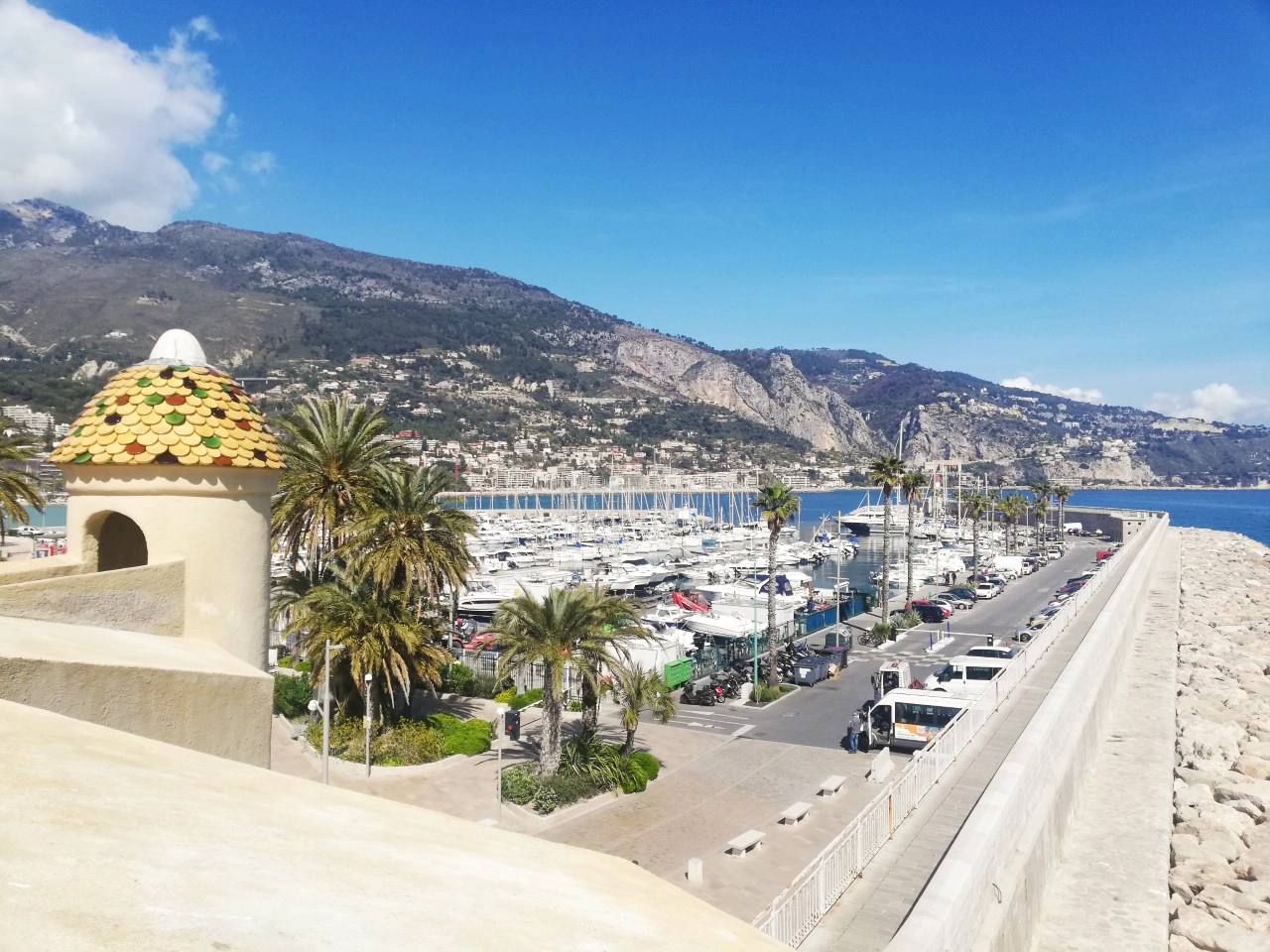
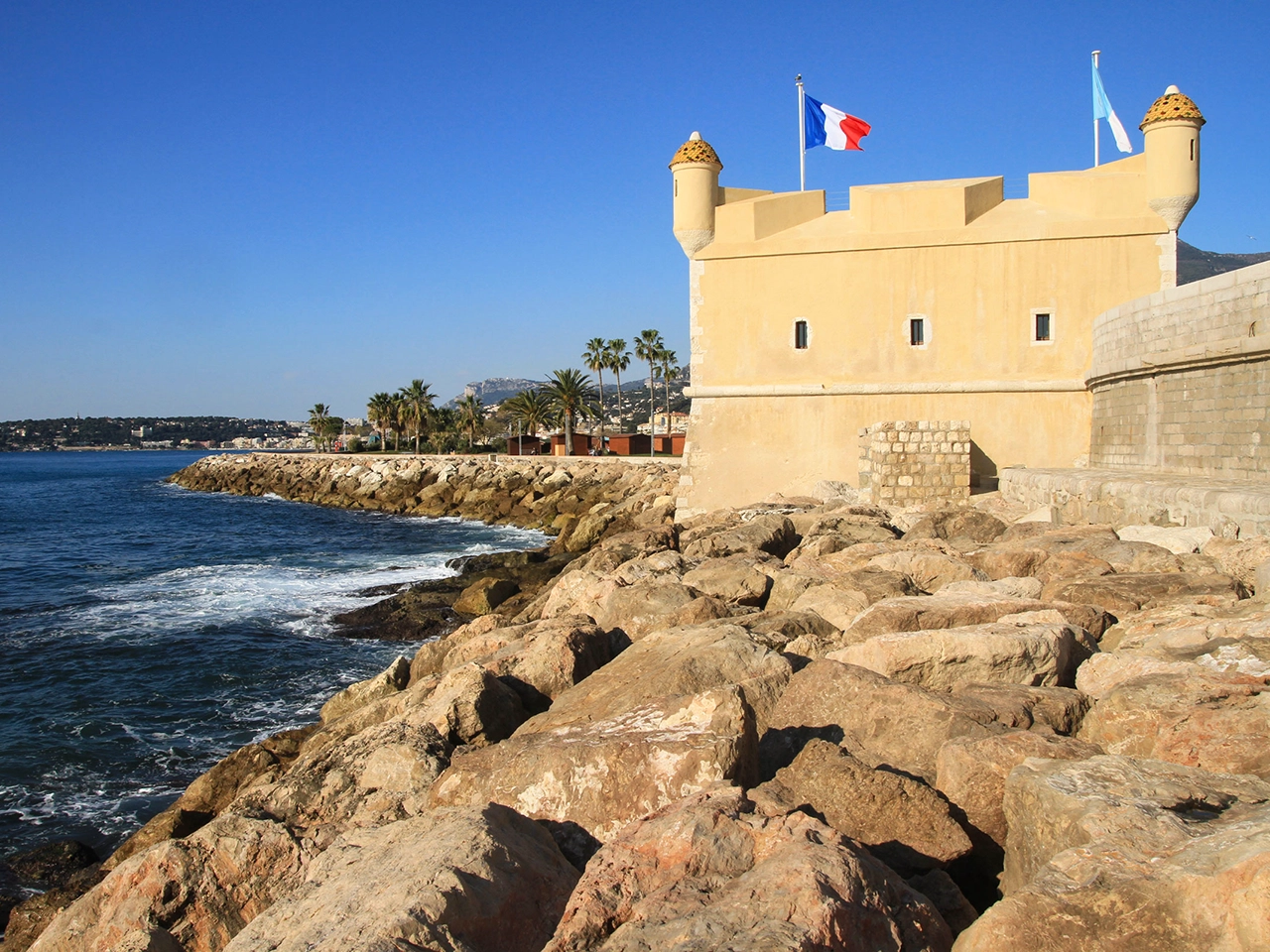
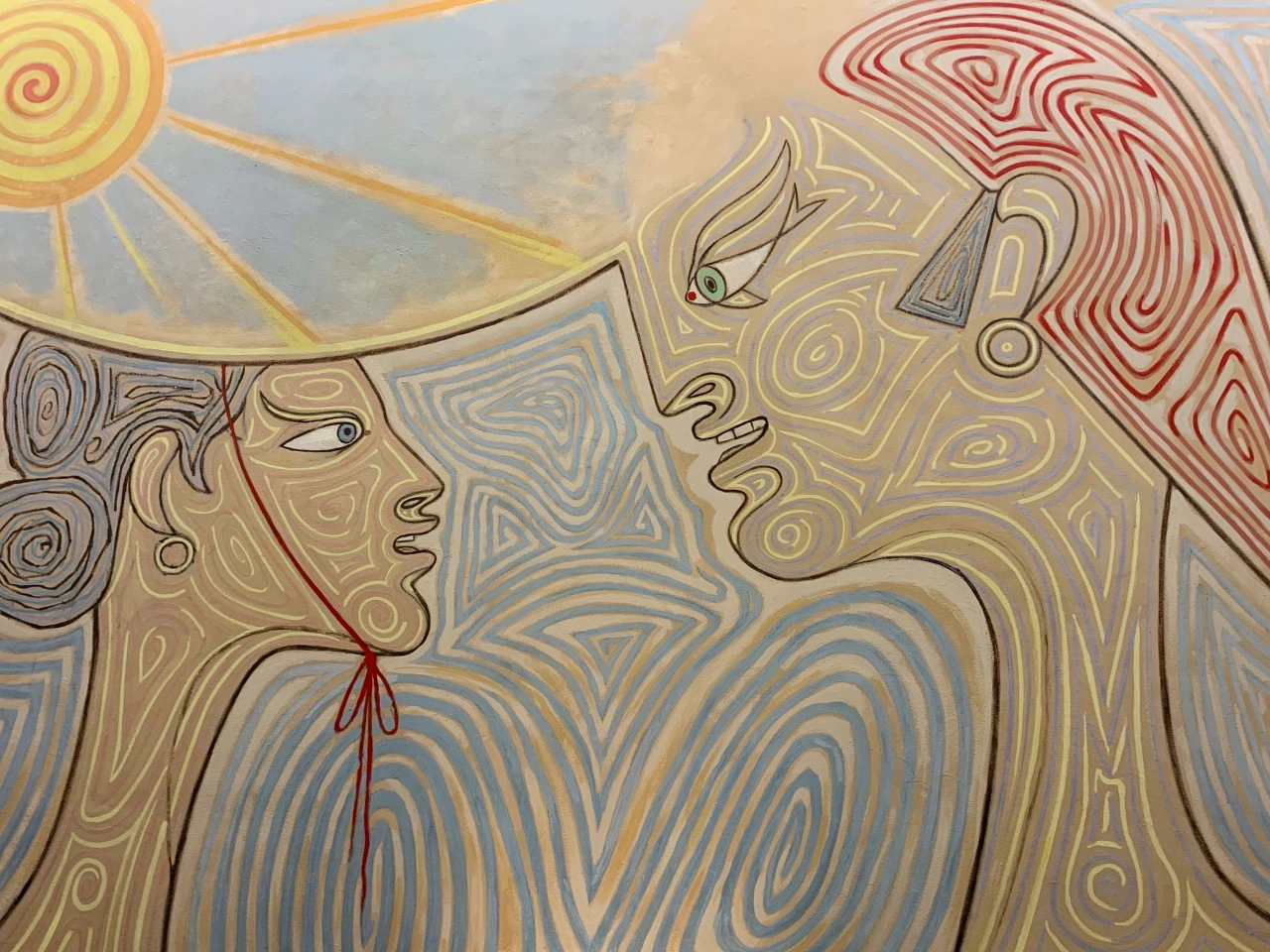
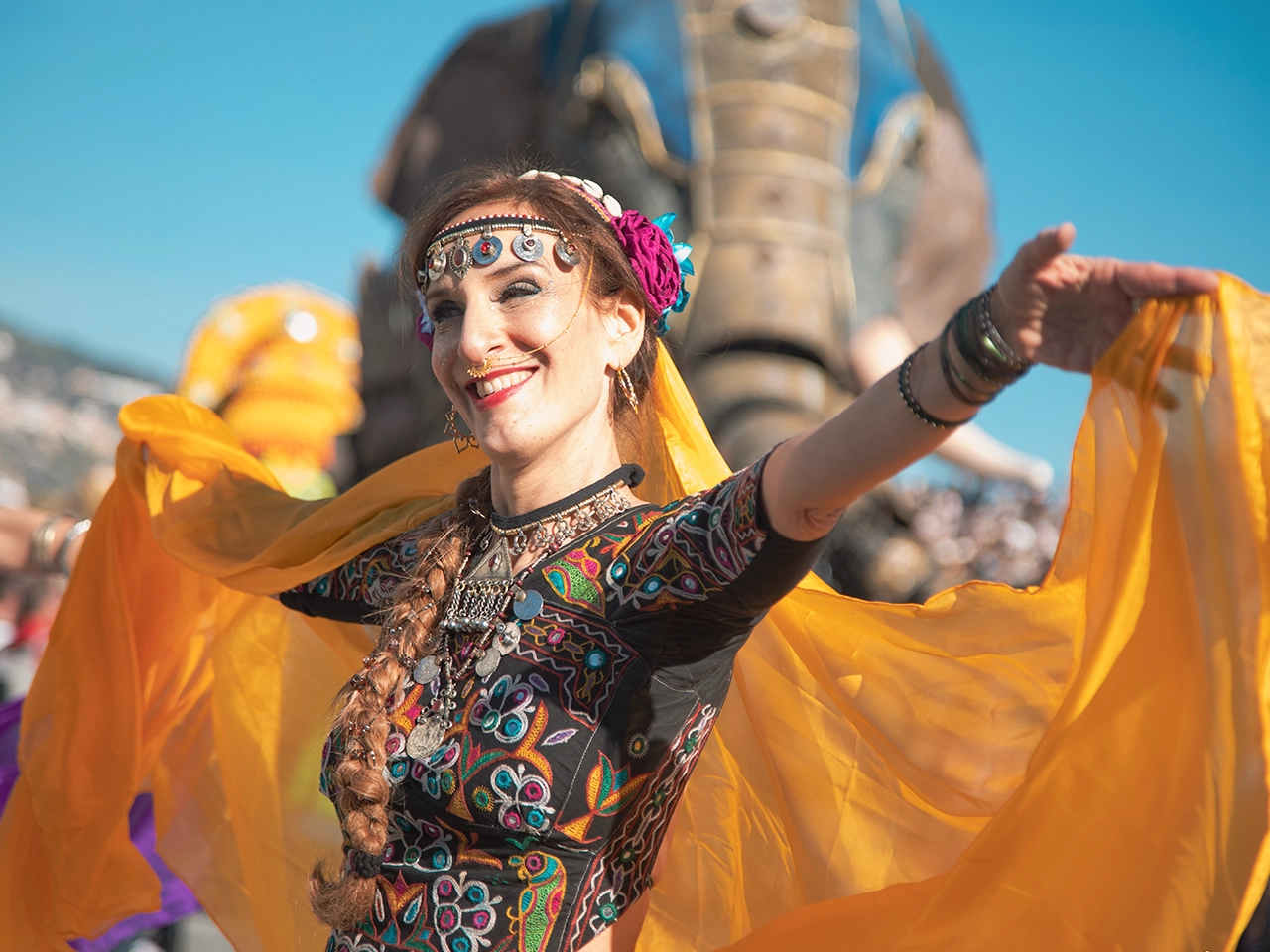
The video introduces Menton through its waterfront, old streets, gardens and Mediterranean setting. The accompanying image gallery below provides a closer look at the historical, botanical and cultural details that cannot all be included within a short film.
Menton in Pictures
Markets, Lemons and Local Flavours
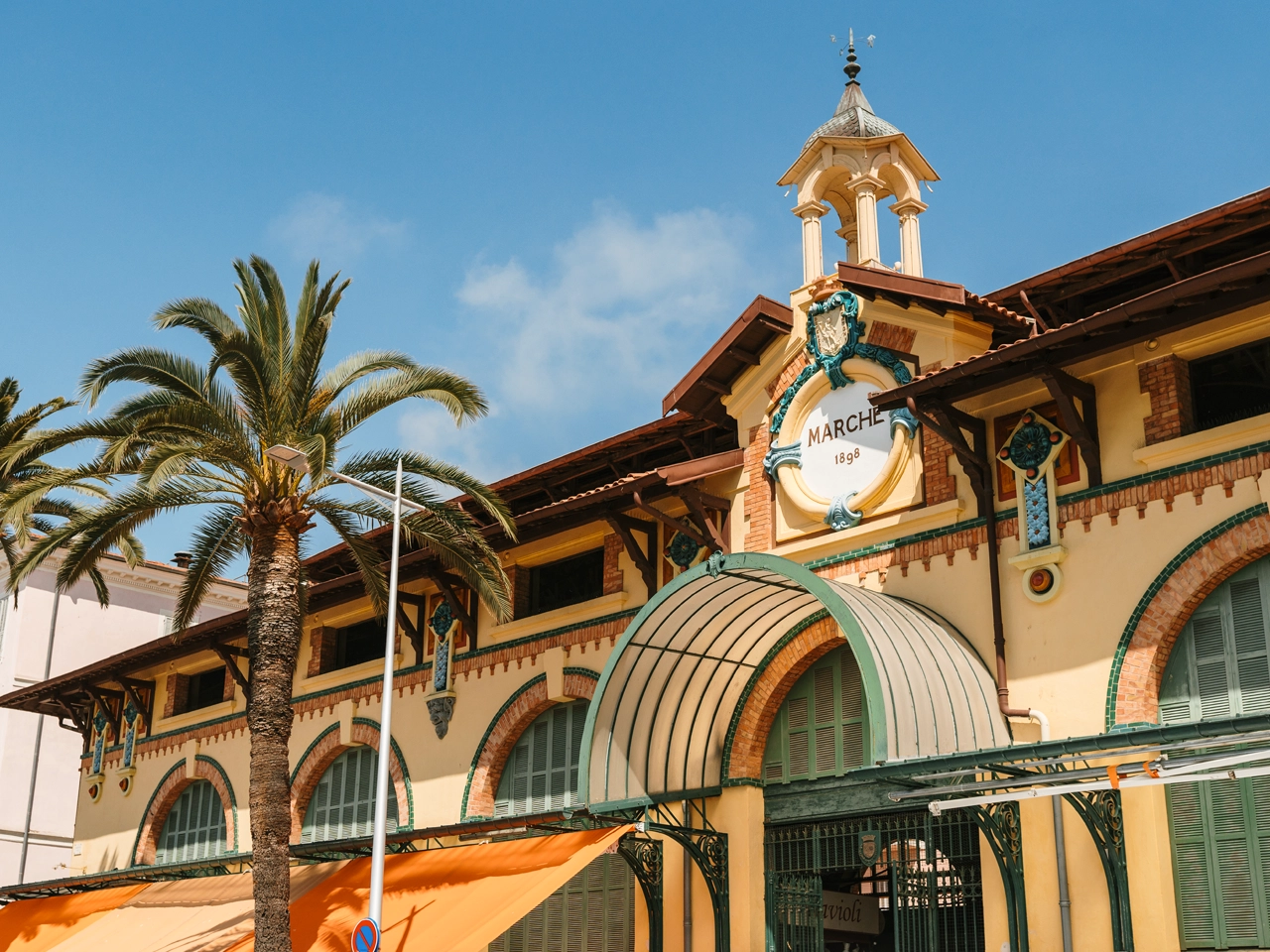
Morning is the best time to visit Les Halles, Menton’s covered market close to the waterfront. The stalls bring together fruit, vegetables, fish, cheese, flowers, prepared food and regional products, making the market a useful introduction to the flavours shared by Provence, Liguria and the valleys behind the coast.
Look for local specialities including barbajuans, small fried parcels traditionally filled with vegetables and cheese; pichade, a Menton-style onion and tomato tart; socca made with chickpea flour; savoury tourtes mentonnaises; and lemon tarts prepared with the town’s best-known ingredient.
The Menton lemon is more than a souvenir motif. Protected by IGP status, the Citron de Menton is recognised for its particular character and its connection to the local landscape. Its cultivation is part of a wider agricultural tradition built around steep hillside orchards, carefully maintained terraces and a climate protected by the surrounding mountains.
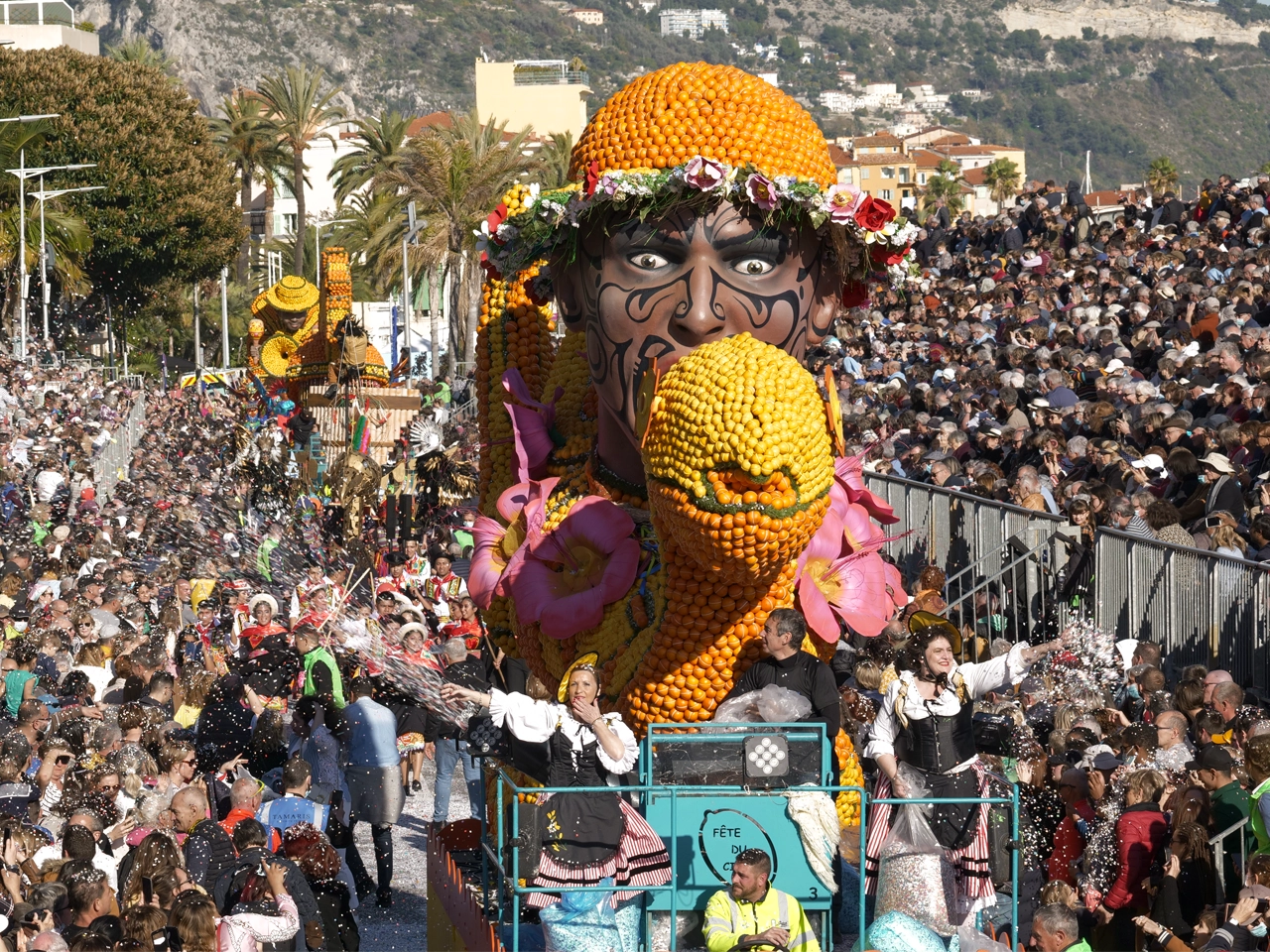
Citrus remains part of the town’s cooking, gardens and identity. It is celebrated most visibly during the annual Fête du Citron®, held for more than two weeks during the second half of February. Since 1934, the festival has filled Menton with monumental citrus displays, decorated floats, illuminated gardens and parades, attracting around 200,000 visitors each year.
The fruit used to create the festival’s enormous temporary structures should not be confused with the protected Citron de Menton itself. The local IGP lemon is a cultivated regional product found in orchards, shops, preserves, pastries and restaurant dishes throughout the area.
Art, Cocteau and the Belle Époque
Jean Cocteau left one of Menton’s strongest cultural legacies. His work can be discovered at the Musée Jean Cocteau – Le Bastion, a seventeenth-century fort overlooking the sea that Cocteau himself helped transform into a museum.
He also decorated the wedding room of the Hôtel de Ville, creating an extraordinary interior in which drawings, murals, colours and furnishings form a complete artistic composition. It remains one of the most unusual places associated with the artist in France.
Menton also holds the important Séverin Wunderman collection, donated to the town in 2005. The collection includes works connected with Cocteau, Sarah Bernhardt and modern art. Although the dedicated Musée Jean Cocteau – Collection Séverin Wunderman building is currently closed, works from the collection continue to be presented through exhibitions at the Bastion and the Galerie des Musées. Visitors should check current exhibition arrangements before travelling.
The town carries an equally strong Belle Époque imprint. From the second half of the nineteenth century, wealthy winter visitors were attracted by Menton’s gentle climate. Villas, former palace hotels, planted terraces and promenades transformed the town, while introducing many of the exotic plants that now form part of its botanical identity.
Buildings such as the Palais de l’Europe and the former grand hotels preserve something of that period, while the Boulevard de Garavan provides a longer route through gardens, historic properties and sea views towards the Italian frontier.
Eating in Menton
Eating in Menton can be as simple as buying something warm from the market or as ambitious as planning a destination meal. Local cooking draws naturally on both sides of the border, combining Provençal produce, Ligurian influences, Mediterranean fish, olive oil, vegetables and citrus.
At the highest international level, Mirazur holds three Michelin stars and has helped establish Menton as a major gastronomic destination. Its cooking is closely connected to the surrounding landscape, its gardens and the meeting of France, Italy, the mountains and the Mediterranean.
Elsewhere, contemporary restaurants such as JR Bistronomie reflect the same geographical position in a more informal way, combining French technique with Provençal ingredients and influences from nearby Italy. Small bakeries, market counters and traditional restaurants make it equally possible to explore Menton through barbajuans, pichade, socca and lemon-based pastries.
How to Experience Menton
Menton works best without a rigid checklist. Begin at the waterfront and Les Halles, climb through the old town to the Basilica and the Vieux Château cemetery, then choose one garden rather than trying to visit them all in a single day.
Follow Cocteau’s story through the Bastion and the wedding room, look for the architectural traces of the Belle Époque and return to Les Sablettes or the old port as the light changes. Those staying longer can explore the gardens above Garavan, visit a local citrus producer or continue east towards the Italian border.
The centre is compact enough to explore on foot, although the old town contains steep lanes, steps and uneven surfaces. Several of the gardens are spread across the hillsides and may require a bus, taxi or car, so opening arrangements and access should be checked before setting out.
Menton is varied enough to fill a relaxed day without repetition, but its gardens, museums, markets and surrounding landscape reward a longer stay. Its appeal lies in the way sea, colour, history, food, art, gardens and Franco-Italian culture fit naturally together.
Live Webcams
Vieux Port de Menton — panoramic
Port de Garavan — panoramic